Relapsing Polychondritis: Symptoms, Causes, and Treatment Options
- Jitka Burger

- Nov 5, 2024
- 8 min read
Updated: May 27

Experiencing painful ears, nose, eyes, or joints? Wondering whether it could be relapsing polychondritis (RP)? Curious about available treatment options and whether diet and lifestyle may play a role?
What Is Relapsing Polychondritis?
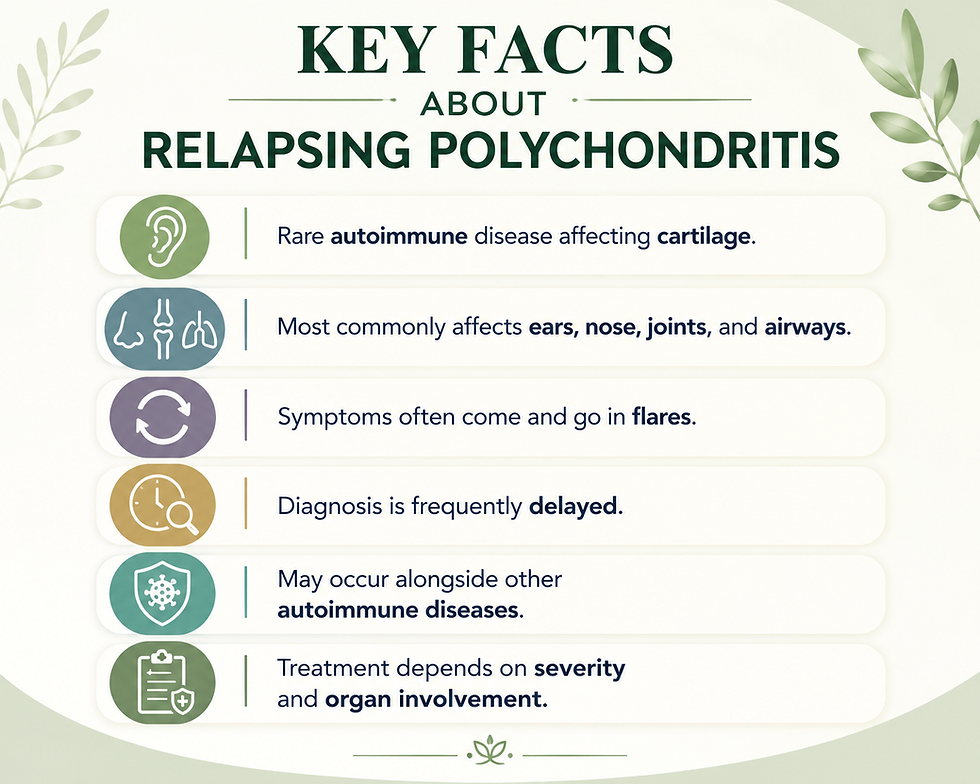
Relapsing polychondritis (RP) is a rare autoimmune disease characterized by recurrent episodes of inflammation affecting cartilage and other connective tissues throughout the body.
The condition is uncommon, affecting approximately 0.71–3.5 people per million annually. RP can involve many parts of the body, including the:
ears
nose
eyes
joints
larynx
trachea
kidneys
heart
and blood vessels
Over time, repeated inflammation may lead to structural damage and changes in appearance or function, including:
“cauliflower ear”
saddle-nose deformity
hearing problems
vision complications
and respiratory difficulties




RP affects both men and women and may occur at almost any age, although it most commonly develops between ages 40 and 50.
Because autoimmune diseases often overlap, up to 30% of people with RP also have another autoimmune or connective tissue disorder, such as:
rheumatoid arthritis
lupus
or Sjögren’s syndrome [1,2]
Why Is RP Often Difficult to Diagnose?
Relapsing polychondritis can be difficult to recognize because symptoms may:
come and go
affect different organs
and resemble other autoimmune or inflammatory conditions
Early symptoms may include:
fatigue
fever
weight loss
night sweats
and swollen lymph nodes
Because of this variability, diagnosis is often delayed by several years.

Diagnosing Relapsing Polychondritis
There is currently no single blood test that confirms RP. Diagnosis is usually based on symptoms, physical examination, imaging, and sometimes biopsy findings.
Patients often meet several of the following criteria:
recurrent inflammation of both ears
inflammatory arthritis
inflammation of nasal cartilage
eye inflammation
respiratory tract involvement
hearing loss or vertigo
When to Seek Immediate Medical Attention
Seek urgent medical care if you experience:
shortness of breath
wheezing
chest pain
severe eye pain or vision changes
sudden hearing loss
dizziness or fainting
This is especially important because airway involvement in RP can occasionally become life-threatening.
Conventional Treatment Options
Because RP is rare and varies greatly between individuals, there is no one-size-fits-all treatment plan, and options depend largely on disease severity and which organs are affected.
Medication-Based Treatments
Mild cases may be treated with:
glucocorticoids (such as prednisone)
or dapsone
More severe disease may require:
methotrexate
cyclophosphamide
or biologic medications targeting the immune system
Several biologic drugs have been tried with mixed results, including:
infliximab
adalimumab
etanercept
abatacept
tocilizumab
and rituximab (The use of rituximab for RP was unsuccessful.) [3]
While these medications may help reduce inflammation and control disease activity, they can also carry potential side effects and risks, particularly with long-term use. These may include increased infection risk, liver toxicity, bone loss, elevated blood sugar, gastrointestinal symptoms, or other medication-specific complications.
Surgical Management
In severe cases involving airway collapse or respiratory complications, surgical procedures such as:
airway stenting
tracheostomy
dilation
or airway reconstruction
may become necessary.
What Causes Relapsing Polychondritis?
The exact cause of RP remains unknown. Researchers believe the disease likely develops through a combination of:
genetic susceptibility
immune dysfunction
and environmental triggers
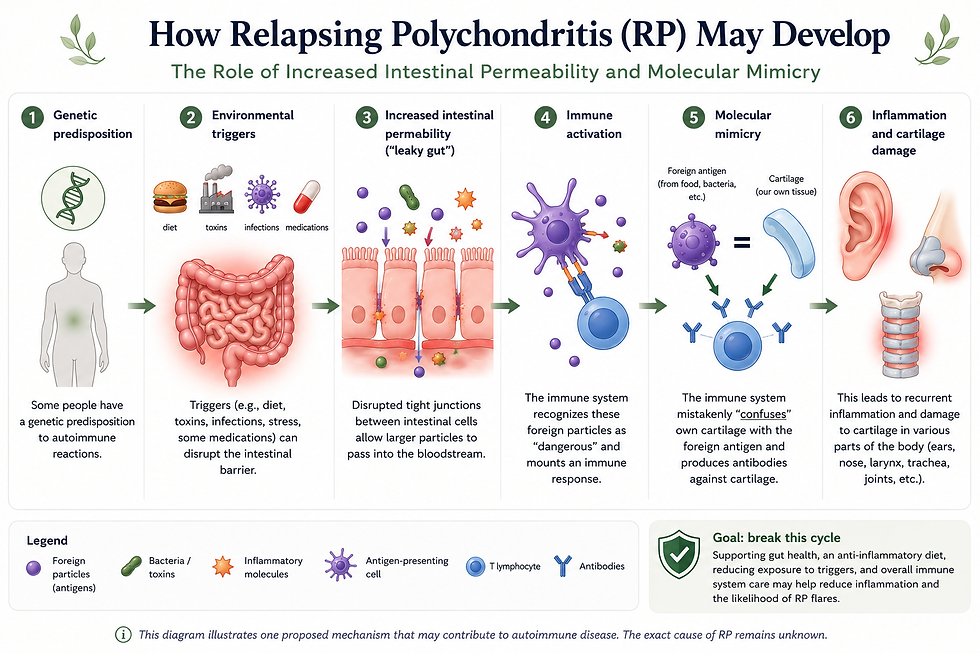
Some scientists have proposed that factors affecting the gut microbiome, intestinal permeability (“leaky gut”), infections, or environmental exposures may contribute to autoimmune activation in susceptible individuals. However, direct evidence specific to RP remains limited.
Because RP is so rare, much of what we know about diet and lifestyle interventions comes from research on other autoimmune diseases rather than RP specifically.
Similar to other autoimmune diseases, researchers hypothesize that RP may develop through the following process:
Genetic predisposition sets the stage.
Environmental factors cause barrier permeability (such as leaky gut), potentially allowing food particles, bacterial products, or other substances to enter the bloodstream and interact more directly with the immune system.
The immune system may begin reacting abnormally to these triggers, which may resemble cartilage or other tissues, leading to “molecular mimicry”—a process where the immune system mistakenly attacks the body’s own tissues.
Can Diet and Lifestyle Influence Autoimmune Disease?
Although there are currently no large dietary intervention trials specifically for RP, research in other autoimmune and inflammatory diseases suggests that lifestyle factors may influence inflammation, immune regulation, gut health, and overall health outcomes.
Some studies suggest that plant-predominant dietary patterns rich in:
fruits and vegetables
legumes
whole grains
nuts and seeds
fiber
and minimally processed foods
may help support a healthier inflammatory profile.
Whole plant foods are naturally rich in antioxidants, phytochemicals, vitamins, minerals, and fiber that support overall health.
A whole-food, plant-based dietary pattern may also help support:
gut health
weight management
cardiovascular health
and systemic inflammation
Some individuals with autoimmune disease also report improvement when limiting:
highly processed foods
alcohol
and foods that appear to trigger symptoms
Because food sensitivities vary considerably between individuals, elimination diets should ideally be supervised by a qualified healthcare professional.
Note: If you look up the term Relapsing Polychondritis (RP) in the National Library of Medicine, the world’s largest medical library, you will find more than 2,000 publications. However, very few discuss nutrition or lifestyle interventions. While no specific diet has been proven to place RP into remission, some patients report symptom improvement with dietary and lifestyle changes.
Additional Lifestyle Considerations
General lifestyle practices that may support overall health and immune regulation include: [4,5,6,7,8,9]
regular physical activity
adequate sleep
smoking avoidance
stress management
maintaining social connections
and consistent daily routines
Stress-reduction practices such as:
meditation
mindfulness
yoga
and relaxation techniques
may also help some individuals cope with chronic autoimmune disease.
Some studies suggest that certain probiotic strains, including Lactobacillus rhamnosus, may help support immune regulation and gut health in some autoimmune conditions, though evidence remains limited. [4]
Scientific Support for the Diet Approach
Several studies support the benefits of a plant-based, gluten-free diet for autoimmune conditions: [10-23]
Some studies suggest that plant-based dietary patterns may help reduce inflammation, improve gut health, and support healthy body weight in certain autoimmune conditions.
A very low-fat, vegan diet may improve symptoms in patients with autoimmune arthritis.
A raw vegan diet high in antioxidants and fiber has been shown to reduce joint stiffness and pain.
Certain herbs and spices with anti-inflammatory properties, such as turmeric, ginger, and cinnamon, may serve as helpful additions to an overall healthy dietary pattern.
Important Note About Vaccines, Medications, and Autoimmune Disease
Rare case reports have described RP onset or flare-ups following infections, medications, or vaccinations, including COVID-19 vaccination. However, case reports alone cannot establish causation, and current evidence remains limited. Medical decisions regarding vaccinations or medications should always be individualized and discussed with a qualified healthcare professional.
Similarly, antibiotics, which might be essential and potentially lifesaving in certain situations, may influence the gut microbiome and intestinal barrier function, which might contribute to immune dysregulation in susceptible individuals.
Medications should never be stopped or avoided without medical guidance.
Conclusions
Relapsing polychondritis is a rare and complex autoimmune disease that can affect multiple organs and significantly impact quality of life. Because symptoms and severity vary greatly between individuals, treatment often requires an individualized approach and, in some cases, ongoing medical care and monitoring.
Although no specific diet has been proven to cure RP, growing evidence from autoimmune and inflammatory disease research suggests that lifestyle factors may influence inflammation, immune regulation, and overall health. A dietary pattern centered around whole plant foods, fiber-rich meals, regular physical activity, adequate sleep, stress management, and avoidance of smoking and highly processed foods may help support overall well-being and reduce inflammatory burden in some individuals.
At the same time, responses to dietary and lifestyle interventions can vary considerably from person to person. While some individuals may require medications or surgical interventions, others report meaningful improvement with intensive lifestyle changes alongside appropriate medical care.
Because RP remains poorly understood and research is still limited, especially regarding nutrition and lifestyle interventions, more high-quality studies are needed. As scientific understanding continues to evolve, a balanced, evidence-informed approach combining appropriate medical care with healthy lifestyle practices may offer the best long-term strategy for many people living with relapsing polychondritis.

Having experienced an autoimmune diagnosis, I empathize deeply with those affected and am dedicated to helping others find relief. If you’re ready to take control of your health, adopting these changes may lead to fewer flare-ups, improved symptoms, and an overall healthier life.
If you give me the privilege to guide you on your way to recovery,
I will be happy to assist you.
Small, consistent lifestyle changes may have a meaningful impact on long-term health and quality of life.
Resources: [1] Borgia F, Giuffrida R, Guarneri F, et al. “Relapsing Polychondritis: An Updated Review.” Biomedicines. 2018 Sep; 6(3): 84. https://www.ncbi.nlm.nih.gov/pmc/articles/PMC6164217/ [2] Chauhan K, Surmachevska N; Hanna A. “Relapsing Polychondritis.” StatPearls Publishing; 2020 Jan [3] Alqanatish JT, Alfarhan BA, Qubaiban SM. “Limited auricular relapsing polychondritis in a child treated successfully with infliximab.” BMJ Case Rep. 2019; 12(5): e227043. [4] Martín R, Chamignon C , Mhedbi-Hajri N et al. “The potential probiotic Lactobacillus rhamnosus CNCM I-3690 strain protects the intestinal barrier by stimulating both mucus production and cytoprotective response.” Sci Rep. 2019; 9: 5398. [5] Serratrice J, Ené N, Granel B et al. “Severe Relapsing Polychondritis Occurring After Ear Piercing.” J Rheumatol. 2003 Dec;30(12):2716-7. [6] Seida I, Alrais M, Seida R, et al. Autoimmune/inflammatory syndrome induced by adjuvants (ASIA): past, present, and future implications. Clin Exp Immunol. 2023;213(1):87-101. doi:10.1093/cei/uxad033
[8] Buchan SA, Seo CY, Johnson C, et al. Epidemiology of Myocarditis and Pericarditis Following mRNA Vaccination by Vaccine Product, Schedule, and Interdose Interval Among Adolescents and Adults in Ontario, Canada. JAMA Netw Open. 2022;5(6):e2218505. Published 2022 Jun 1. doi:10.1001/jamanetworkopen.2022.18505
[9] Vojdani A, Kharrazian D. Potential antigenic cross-reactivity between SARS-CoV-2 and human tissue with a possible link to an increase in autoimmune diseases. Clin Immunol. 2020;217:108480. doi:10.1016/j.clim.2020.108480
[10] Barbaresko J, Koch M, Schulze MB et al. “Dietary pattern analysis and biomarkers of low-grade inflammation: a systematic literature review.” Nutr Rev. 2013 Aug;71(8):511-27. [11] Alwarith J, Kahleova H, Rembert E, et al. “Nutrition interventions in rheumatoid arthritis: The potential use of plant-based diets. A review.” Front Nutr. Published online September 10, 2019 [12] HafströmI, Ringertz B, Spångberg A. “A vegan diet free of gluten improves the signs and symptoms of rheumatoid arthritis: the effects on arthritis correlate with a reduction in antibodies to food antigens.” Rheumatology (Oxford). 2001 Oct;40(10):1175-9. [13] McDougallJ, Bruce B, Spiller G et al. “Effects of a very low-fat, vegan diet in subjects with rheumatoid arthritis.” J Altern Complement Med. 2002 Feb;8(1):71-5. [14] Hänninen, Kaartinen K, Rauma AL, et al. “Antioxidants in vegan diet and rheumatic disorders.” Toxicology. 2000;155:45-53. [15] Müller H, de Toledo FW, Resch KL. “Fasting followed by vegetarian diet in patients with rheumatoid arthritis: a systematic review.” Scand J Rheumatol. 2001;30:1-10. [16] Lithell H, Bruce A, Gustafsson IB, et al. “A fasting and vegetarian diet treatment trial on chronic inflammatory disorders.” Acta Derm Venereol. 1983;63:397-403. [17] Kjeldsen-KraghJ, Haugen M, Borchgrevink CF, et al. “Controlled trial of fasting and one-year vegetarian diet in rheumatoid arthritis.” Lancet. 1991 Oct 12;338(8772):899-902. [18] PeltonenR, Kjeldsen-Kragh J, Haugen M, et al. “Changes of faecal flora in rheumatoid arthritis during fasting and one-year vegetarian diet.” Br J Rheumatol. 1994 Jul;33(7):638-43. [19] Goldner B. “Six Week Raw Vegan Nutrition Protocol Rapidly Reverses Lupus Nephritis: A Case Series.” International Journal Of Disease Reversal And Prevention. Vol 1 No 1 (2019) [20] Gershteyn IM, M.R.Ferreira LMR. “Immunodietica: A data-driven approach to investigate interactions between diet and autoimmune disorders.” Journal of Translational Autoimmunity. Volume 1, April. [21] B. Chandran, A. Goel. “A randomized, pilot study to assess the efficacy and safety of curcumin in patients with active rheumatoid arthritis.” Phytother Res. 2012 26(11):1719 – 1725. [22] Aryaeian N, Mahdi Mahmoudi M, Shahram F et al. “The effect of ginger supplementation on IL2, TNFα, and IL1β cytokines gene expression levels in patients with active rheumatoid arthritis: A randomized controlled trial.” Med J Islam Repub Iran. 2019 Dec 27;33:154. [23] Shishehbor F, Safar MR, Rajaei E et al. “Cinnamon Consumption Improves Clinical Symptoms and Inflammatory Markers in Women With Rheumatoid Arthritis.” J Am Coll Nutr. 2018 May 3;1-6.


